Thursday, October 15, 2026

How to design our Sermons for Learning ?

This little piece of work is a side effect of my tryst with creating, assessing, analysing, and sometimes overanalysing learning and teaching. 

Faithfulness to the Truth and being Intentional about learning need not be competing priorities. 

Some people seem naturally gifted at writing sermons. The rest of us have to learn the craft, practise deliberately, and keep improving. I belong to the latter category!

I am grateful that my journey as a learning designer, working with both adults and children in different contexts, has helped me see preaching as a learning experience. 

Drawing together what I have learned and understood, I have put together a simple evaluation matrix to help us craft more effective sermons.

The focus here is learning and application and not "hermenutics or communication".  I am not attempting to evaluate how we interpret Scripture, or how we communicate it. Rather check if our biblical truth has all the dimensions so that there are no learning gaps.

These five dimensions are informed by evidence-based learning models. The framework is my attempt to apply these ideas to sermon preparation; it is not a framework generated by AI.

Knowledge: Have I made the biblical truth clear?
Skills: Have I shown listeners how to practice it ?
Motivation: Have I explained why it matters?
Habits: Have I identified behaviours to change or cultivate?
Environment: Have I considered the practical circumstances that affect their response?

These dimensions need to be woven throughout the sermon, not necessarily presented as one point after another. They can also be revisited and reinforced at different points in the preaching.

My suggestion is to keep the checklist handy as you prepare your sermons. Use it to think through how you will help people understand the truth, respond to it, and put it into practice. Once you have preached, listen to a recording of your sermon and evaluate yourself using the same matrix. Also, ask a trusted friend to listen and score you against the same criteria. Use it to identify patterns, recognise what is working, and choose one or two areas to improve.

With regular reflection, feedback, and deliberate practice, I believe we can all grow in the craft of teaching with intention.

If you'd like I can show you a few examples of how these are woven in a few sermons. 
 

Wednesday, September 17, 2025

Why do I have to choose a side ?


Why do I always have to be either right or left?
Why does the world demand that my compassion comes with a political label?
It feels like we’re constantly forced into tribes. If you mourn someone on “this side,” you’re expected to ignore the pain on “that side.” If you speak up about one injustice, people assume you’ve chosen a camp, and they immediately test you to see if you belong.
But my heart doesn’t work like that.
When I look at Jesus, I see someone who simply refused to be boxed in by sides. He wept over Jerusalem, even though He knew that same city would turn against Him.
He reached out and healed the servant of a Roman soldier, a man who belonged to the empire oppressing His people.
And when He wanted to teach what love looks like, He didn’t choose a safe example — He chose a Samaritan, someone His listeners would have written off as an enemy.
It is easier to shrink my compassion down to fit my tribe. It’s easier to defend what my “side” does and stay quiet about the wrongs that make my group uncomfortable. But that’s not faithfulness. That’s tribal loyalty.
I can weep for every image-bearer of God whose life is cut short by hatred, violence, or pride.
Jesus didn’t ask me to be left or right. He asked me to be faithful. To stand against evil wherever it rises. To mourn with all who mourn. To keep my heart soft in a world that wants to harden it.
So no, I don’t want to choose a side. I want to choose compassion.
Because in the end, that’s the only way I know to follow Him.

Sunday, September 14, 2025

Why should Preachers care about Cognitive Biases? - Part 2

God made our brains with great wisdom 🧠. They are carefully designed to help us live and make decisions. One way this design shows is through shortcuts in thinking. This is called heuristics.

These shortcuts let us act quickly ⚡ without stopping to think through every single detail.

In the right situation, these shortcuts are a gift ✅. Long ago they helped people decide fast — whether to run from danger, trust a friend, or follow a leader. But when these same shortcuts get used in the wrong place, they turn into biases ⚠️. That’s when our brain starts making mistakes.

Take confirmation bias for example. This comes from the shortcut “trust the people and ideas you already know.” In the past, it kept tribes close and safe. But today it can make us only listen to what we already agree with, even if it isn’t true.

That’s why people sometimes keep following false preachers — not because the message is true, but because it feels familiar and fits what they already want to hear.

Our brains are not faulty — they are simply using good patterns in the wrong way.

And this is where the preacher of truth has a real challenge: to do two things at once.

First, to break through the biases that keep people from hearing👂.

And second, to understand those same patterns, so the truth can be spoken in a way people can grasp ✨.

1. Speak Through Story: The Parable Technique

Jesus used parables as cognitive bypasses 📖 - they slipped past people's mental defenses because they seemed like simple stories. The brilliance was in their delayed revelation . Many of His parables were specifically about the Kingdom of Heaven👑 because the people’s minds were biased toward expecting a political Messiah who would overthrow Rome. Through stories, Jesus gently shifted their imagination from political freedom to God’s larger plan for the redemption of mankind.

People would nod along with a story about a farmer or a wedding, only to realize later that Jesus was talking about them.

The Parable of the Good Samaritan demonstrates this technique:

  * The audience expected the hero to be the priest or Levite (their religious leaders)

  * Jesus made the despised Samaritan the hero

  * By the time they realized the point, they were already emotionally invested in the "wrong" character

  * The question "Which was a neighbor?" forced them to voice what they'd unconsciously accepted

The Parable of the Workers in the Vineyard challenged their merit-based thinking:

  * Started with a familiar employment scenario

  * Gradually revealed God's grace operates differently than human fairness

  * By story's end, they're questioning their assumptions about who "deserves" God's blessing


Take this modern parable:

A couple went out to dinner for their anniversary 🍽️. The husband was very polite to the waitress: “Thank you so much for the nice seat!” He was patient when the service was slow: “No worries at all!” He was understanding when his order came out wrong: “These things happen!”

But when his wife mentioned she’d had a hard day with the kids, he checked his phone 📱. When she tried to share something that excited her, he looked around the restaurant. When she suggested they should do this more often, he said, “If we could afford it” — even though he had just left a generous tip for the stranger serving their food 💵.

The waitress walked away thinking, “What a kind man.” His wife drove home thinking, “He’s nicer to people he’ll never see again than he is to me.”

The story makes us stop and reflect: Why do we so often choose kindness for strangers but not for the people we claim to love most ❓

That’s a cognitive bypass at work. Instead of me standing in the pulpit saying, “We often treat strangers better than family,” which might trigger defensiveness, the story slips past our mental shortcuts. It bypasses the bias of self-justification and lets us see the truth for ourselves.

The goal is to help our audience see clearly ✅ - and once they see clearly, the Spirit can do the work of transformation ✨ that no amount of direct argument could accomplish.

 Try This in Your Sermon Prep ✍️

As you prepare your next preaching, try this simple exercise:

1️⃣ List the problem statements you want to highlight in single sentences. (For ex: We don’t prioritize God. We are slow to obey.)

2️⃣ List common incidents your audience experiences.  (For ex: Morning rush)

3️⃣ Think of a story that can let people see themselves in the problem 📖

💡 Allow it to simmer in your mind. Be observant in everyday life 👀. Notice the stories hidden in ordinary moments. This practice will not only enrich your sermons but also train you to see God’s truth at work in the world around you 🌍.

In Part 3, we’ll look at another of Jesus’s methods: how He used contrast with the familiar (“You have heard it said… but I say to you”) to break through old thinking and anchor people in God’s truth.

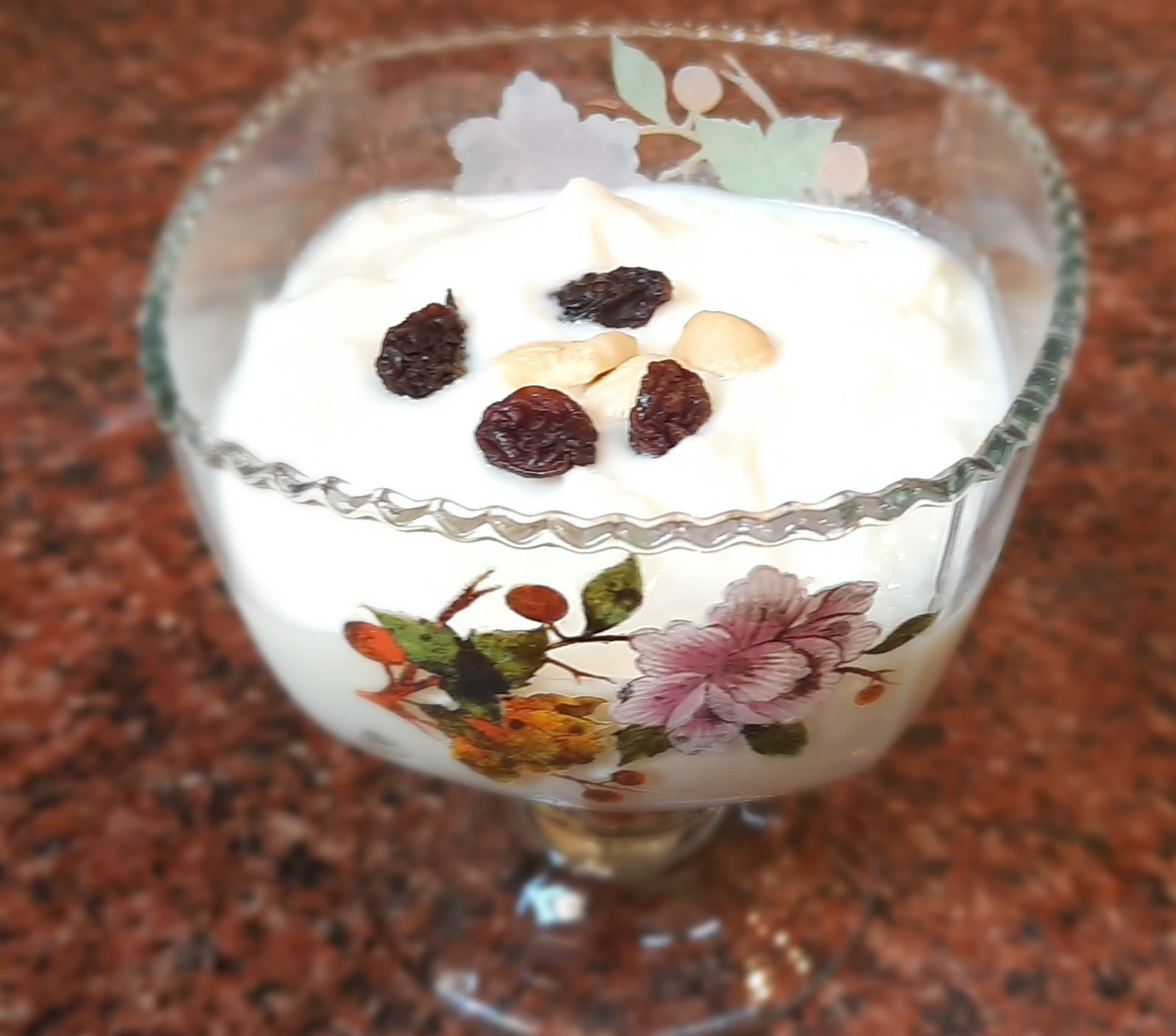
Saturday, September 13, 2025

Why Preachers Should Care About Cognitive Biases – Part 1

 Many faithful preachers hold to a conviction: “The truth is enough. Preach the Word faithfully.”

This conviction flows from a deep reverence for Scripture and a right belief that transformation is the Spirit’s work, not ours. That’s noble. That’s beautiful. And it reflects humility before the sovereignty of God.

But here’s the hard part. That same conviction can sometimes lead to sermons that speak truth but don’t stick. Doctrinally precise, heartfelt, hermeneutically sound,  Spirit-trusting sermons… evaporating from memory before people even step out of the building.

Why? Not because the truth is weak. Not because the Spirit is absent. But because the human mind is flooded with distraction, forgetfulness, and competing voices that know how to grip attention.

And here’s the uncomfortable contrast:

False preachers, cult leaders, political demagogues, even marketing executives — they study how people think. They use memory, story, repetition, emotion, and social influence to lodge their half-truths and lies into human hearts. 

Their messages stick not only because it is what their ears itch to hear, but also because they’re designed to be unforgettable.

So we have to ask:

  • If deceivers are so intentional, can truth-tellers afford to be careless?

  • If God has designed human minds in a certain way, are we being good stewards of the gospel if we ignore that design?

The answer is not to copy manipulation. The answer is stewardship.

Think of money. In one person’s hands, it funds corruption. In another’s hands, it feeds the hungry and builds hospitals. The tool is neutral. Its purpose gives it meaning.

The same with psychology. Used for self-promotion, it manipulates. Used for truth-telling, it honors the hearer — it makes sure the seed of God’s Word falls on ground where it can take root. It’s not about performance. It’s about faithfulness.

That’s why I want to write about some of these tools. Not to make sermons flashy, but to make them memorable. Not to replace the Spirit’s work, but to serve it.

I am not a psychologist, nor do I claim to be a master communicator. I am simply someone who has prayed, wrestled, and brooded over this tension for a long long time: how to keep truth from slipping through our mind.

Titus 2:7–8 says: “In your teaching show integrity, seriousness, and soundness of speech, so that those who oppose you may be ashamed because they have nothing bad to say about us.”

I only want to illuminate this small phrase: soundness of speech. Because truth deserves not only to be preached — but to be preached well. 

Wednesday, August 17, 2022

My Tears

 My Tears

I was travelling by bike, and a grain of sand found its way inside my right eye. Almost immediately, my eyelashes began to blink reflexively to prevent further dirt from entering the eyes.
The lacrimal tear glands in my eye gushed water, the mucous glands in the conjunctiva produced mucus, and lipid glands in the eyelid margin produced an oil. The mucus and oil mix with the watery portion of the tears to create a more protective tear film.
My son was on my lap, and my left hand gripped him tightly. The glands worked together to bath my eyes with the salty tears. Moreover, I believe that the antibodies in tears helped to prevent further infection.
My right hand was holding on to the handle on the bike seat. And almost immediately it gripped even tighter. My nose twitched, and the cheek muscles pushed the lower eyelid upwards to squeeze the dirt out.
My forehead stroked itself on my husband’s back to comfort the strained eye muscles. Slowly, my eyelid started batting continuously, and to my relief, the dirt was finally thrown out. The tears stopped, the grip loosened, and I told my husband what just happened.
I wish I knew how many nervous commands had to be passed to the so many different organs and glands in my body to be able to get this job done.
What if I had to think and give commands to each of these functions? What if they didn’t function? I would have resulted in a cornea abrasion resulting in some eye damage, and probably even lost the grip on my son who would have had a fatal fall from a moving bike.
This little incident made me wonder; maybe this is why Christ called the Church as His body?
Each component was working with coordination, solving problems, doing its job, not asserting importance, not asking for recognition, for the common good of protecting my life. Such a perfect unison, each one’s function is so unique, and yet each one is so loyal to me. When the eye hurt, help from every organ pitched in, no backbiting, no personal complaints. It was everyone's cooperative effort.
For just as the body is one and has many members, and all the members of the body, though many, are one body, so it is with Christ. 1 Corinthians 12:12
If one member suffers, all suffer together; if one member is honored, all rejoice together. 1 Corinthians 12:26
How great is God that he created an excellent model within each one to show us every day how to function as His body. Maybe that is why We are created in His Image.

Seeshan's Graduation

 My son's kindergarten graduation is today and they are conferring on him the title of Masters of Kindergarten. Such a lavish ceremony is planned (which in my opinion is a waste of money) and cute children adorn a cap, a tassel, a gown and a kindergarten diploma.

My son argues that he does not want to hold the diploma roll rather he wants to hold a helicopter. He is a shy guy and he asks, why he must dress up as a clown and let everyone stare him down.
As he talks in his mazhalai accent, I imagine a future where he would graduate from a prestigious college and be shy to give me a hug. I am a south Indian mother after all.
A famous stand-up comedian whose name I don't remember said, "We, south Indians are so obsessed about degrees that even our coffee is called degree coffee."
I reflect on my own life today. I longed to be a surgeon and spent my school life working hard, I learned to be an engineer and also got a degree in business. Then, I worked with software products.
And today, I am a church worker, and an educator and use the rest of the time learning technology, and writing.
Do my degrees help me constantly reinvent myself to adapt to the changing world? I don't know. I am a perpetual learner but I am not sure if my degrees helped me get there.
I believe in the power of education to make rational decisions and improve the quality of life. However, I have also seen uneducated people making excellent life decisions and triple degree folks wasting away their life. But I also understand that those are complex problems that cannot be solved by education alone.
My dream for my children (the ones I birthed and the ones I teach) is that they will solve the problems in the world. With or without a degree. As an educator, that is the kind of tools that I want to give them. Problem solvers, change-makers - that is the kind of title I want to confer on them.
All the best da Seeshan.

Nostalgia Vacation

 When we were children, our father took us almost every year on a trip to his native village Jayapuram in North Arcot District - Thirupattur. We lived most of our lives in Dubai and we always looked forward to great summer vacation in Chennai.

But My father never missed taking us to Jayapuram. Back home in Dubai, daddy was a home bird. Now, he would plan trips, to his neighbour's homes, his childhood picnic spots, the wells that he jumped in to swim, the family church. and so many other places inside the small maybe 200 families large village.
We were surrounded by excellent people, but it was a primitive home. We had idly and kadalai (peanut) chutney for breakfast, natu kozhi (country chicken) kulambu for lunch and kali and kadalai chutney for dinner. Daddy would relish the food like it was the best in the world.
Daddy would transform into a keen churchgoer in his home church, making sure we are there on time. There would hardly be 10 people in the church mostly from the neighbouring village. But we could see Daddy sing in the church, participate in the reading of the scriptures, and become a keen worshipper.
He would fondly remember his grandfather Chinniah whose name he took after and talk about how his family and another person (who never married) were the only converts to Christianity in the entire village.
I can't speak for Annie Deborah, however, even though I enjoyed most part of the vacation in Chennai. I never liked this trip to daddy's boring village. Nothing happening happened here. I longed to eat food from a multi-cuisine restaurant, sleep with air conditioning and do fun stuff. Accompanying Daddy's walk to nostalgia was not very fun for me. But we did it anyway.
Now the 34 and a half-year-old me became just like daddy. My kids wanted to go to the exciting places in Dubai - the happening towers, and gardens and malls. But I wanted to go to my usuals, and linger around the old boring Dubai. I wanted to eat in our usual places - Pakistani, Keralite and Iranian food places, visit my childhood home, and school, go to all the church services and be around some of the people whom I knew as a child.
I kept looking for the Al shindagha tunnel which was the first manmade wonder in Dubai before all the skyscrapers and manmade islands. It is the only underwater road crossing the Dubai Creek. We had many fun conversations and difficult days as we crossed that road. I was elated beyond measure to find the tunnel and was surprised to read a signboard that said, "Historical Shindaga (namaku avalavu vayasu aayidicha!)
But my children were fascinated by the Infinity bridge that towered above it. But I didn't care. Shindagha tunnel refreshed my heart.
Then I realised that the pleasure of exotic destination tours cannot match the therapeutic effect of nostalgic vacations.
With a changed heart, now, I want to make a trip to Jayapuram.

Solitary Grief

 As May 2022 moves on, the pain and darkness of May 2021 grips us. So many lost parts of their souls. Many survive with a hole in the heart. And live emptiness that is deep and cannot ever be filled.

One of my second grader's mother tells me, "I get a panic attack every time I hear an ambulance. I was so strong when he was in the ICU, and when he died, I was too tired to cry. I miss him so much, I never said goodbye and never gave him a send-off worthy of the life that we lived together." I held the phone silently, as she cried and wailed. I could not cry, nor could I say anything to comfort. I just stayed on the phone line.
It was then I realised that grief is a solitary journey. We think we can support the other, but the truth is that no one can bear the burden of another's grief. They may cry with you but they walk alone. Their longings are hidden, everything around them makes them sigh with a painful memory of the past. We cannot feel that pain no matter how empathetic we may try to be.
Praying that those of us experience God's comfort in the deepest places of loss and grief.

A fan

 A fan.

A thriving Marriage is filled with random acts of kindness.
I was pleasantly surprised to see a fan fixed above the table where I use the computer. Never asked for it, nor did I realize that I needed it.
But the husband figured that the wife needed some comfort as she spends a lot of time writing pointless essays on the internet amidst the roasting temperatures in Chennai.
Now this husband is very electricity consumption conscious. His workplace is lit up like a Chinese restaurant - minimal and sometimes hard to see. No fans when the AC is on. Will set the timer for ac to switch off in four hours. Ac temp is strictly at 27 degrees. No overnight charging of gadgets is allowed.
Despite it all, the gesture of getting an extra fan for the wife's face is praiseworthy indeed.
Thank you, dear husband. This fan is an incredible expression of functional love.

God Help her find her tribe


She: Akka, nee niraya padichiruka la
Me: Yennaku thevayana alavu padhichirukaen
She: Naannum kanaku la 90 mark vangirukaen ka, Aana naalan class ku apparum padikila.
And that’s how our friendship started in the pediatric ICU of a public hospital in Chennai.
We watched videos together on how to take levelled spoons of lactogen, how to measure 30ml in the bottle and how to mix lactogen in water. I found much respect for those who do fundamental videos, which I previously thought were unintelligent.
Most doctors tried to help her, they told her to feed the baby solid food to help him increase weight. They told her to stop using the feeding bottle. They always meant good and gave sound advice, but they couldn’t always understand that she was a lone woman raising her child.
The medical personnel were compassionate enough to understand, but just like me, they couldn’t offer more than empathy.
When one of the doctors scolded her for giving the baby a bottle she fired back at the doctor.
She bomabarded other women in the ICU who told her, “Ivalo naal aachu, innum geti aagarum kudakalaya..??” She hated judgement.
She was bold enough to tell the doctor to change the bed of her neighbour because she was asking too many questions.
She used to call me for support when the doctors reprimanded her. She couldn’t comprehend the advice. She believed that everyone thought that she was a bad mother.
She wasn't adamant, she was clueless and all the instructions were impossible to accomplish according to her.
I showed her videos of how bottles need to be sterilised and washed with soap and water. (Even more respect for those who make basic videos)
Her methods of bottle rinsing will cause infections, ‘kaniku theriyadha poochi valarum’ I told her. That’s why the doctors were telling her to not use bottle I explained.
Anna akka, avan sapita maateengara ka, naan yenna panradhu?
Some children find it tough to transition to solids, and I realised how overwhelming it must be for her. Maybe she's struggling with postpartum depression. But I guess that’s a condition that have-nots cannot afford to have.
Alloparenting is animal behaviour, where an individual other than the biological parent of an offspring performs the functions of a parent (as by temporarily caring for an infant). Alloparenting enhances the quality of offspring care and is especially of much use in vulnerable infants. The human species have always had alloparents in the form of grandmas, aunts, and older sisters.
She had no womenfolk to help her, to teach her, to support her and help her raise her child. Maybe she antagonised them herself, maybe she’s too proud to ask for help, or maybe she’s surrounded by a bunch of selfish people.
When another baby in the ICU passed away, she held my hand and said, “akka, bayama irriku ka, ivan nalla irupaan la..” I told her, “Doctor, pechu keezhpadinja, onnum pirachina illa, don’t worry!”.
She got eager for a moment to follow the doctor’s instructions.
From, the next day we tried feeding the baby solid food, boiled apples, watery idly, mashed kanji, cerelac, and the little fellow was angry, and frustrated, he spat, he kicked , he flung it all. He was a fussy eater. And she was a frustrated mother.
They say women need a tribe. I had mine to watch my back when my son was in the hospital.
My sister sent me baby videos and voice records to cheer us up, my mother sent Seeshan home-cooked food that appealed to his precise taste-buds.
My mother in law ensured that Arpana did not miss a day of school. Also, when I came home to refresh, she made me hot lunch and fried appalams for the side. My sisters in law called and always checked on whether I was comfortable.
But this young mother with an 8-month-old infant did not have her own tribe of women to support her. To add to it, even the simplest medical explanations about her son’s condition seemed perplexing to her.
My friend is a fiery woman, a very young mother, maybe she didn’t have a happy childhood, maybe she faced abuse, and maybe she is hurt, or maybe her executive functions aren’t well developed and gets easily frustrated when trying to do her tasks.
But she was a loving mother, her son would smile at her, and she would hug him and kiss him, and he would laugh.
When it was time for my son’s discharge, she said, “akka, naan poori vaangitu varaen, namma sapidalama ka..” And yes, we broke bread together.
When it was time for me to go, she said, “Yenna ka, yena vitu poreeya..?”
I asked if I can pray for her baby, I closed my eyes and prayed a small prayer for health for the child and help for the mother. I opened my eyes after praying to see her munching on a samosa. But I know that the angels said "amen" with me.
I told her that she can always call me and I’ll try to connect with her as much as I can. Sadly, there isn’t much I can do unless her tribe of women find her.


Thursday, May 14, 2020

Chithappa and Mahalabhiya


I grew up around a father and mother who were always busy. They were the best kind, and instilled much love and stability in the family – however, they were always busy. Or rather that’s the message that I got as a child. But the arrival of chithappa every weekend was a breath of fresh air amidst the busy working routine of my parents.

He would take me on long walks, let me play video games and ride-on toys. He would answer my funny questions and tell me like a hundred stories. There was one very special thing that we would do together, and the picture is so clear in my mind as if it happened yesterday.

Across the road, we went to this restaurant. Chithappa would always be adventurous and choose strangely named food items from the menu card. One day, we decided to have mahalabiya. We didn’t know what it was but decided to give it a shot. And to our surprise it was fabulous. We enjoyed it so much.

Mahalabhiya with chithappa became a religious ritual ever since. Every time we went out, just the both of us, we would definitely eat mahalabiya together. I enjoyed it so much. We moved out from that state, and soon our eating interests changed too. However, mahalabiya is a desert I can never forget.

Because Mahalabiya reminded me of the many ways chithappa was a friend and someone with whom I could have long ‘point-less’ conversations. Now that I am an adult, I wonder how chithappa had the patience to spend so much time talking to me, listening to me playing with me, and filling my love tank. He was like my best favorite adult friend.

Arpana is fortunate too, to have many loving adult friends, - her athais and her chithi. When she talks with them and goes out with them, memories with my own chithappa flash before my mind – especially the mahalabiya outings.

I was so tied to the context in which I ate this dessert, it became symbolic of my time with chithappa – that I almost forgot that it a desert that I recreate in my kitchen. I took some help from Google mamma, and I made it – and it tasted nice – but I so missed eating it with chithappa.
Maybe sometime soon, I will eat mahalabiya with chithappa and bombard him with more of my pointless conversations.

                                                   The Mahalabiya that I ate alone.


Ammachi's Kuzhandhai Alva

Ammachi would make me a quick snack everyday after I returned from school. The 'snacks' would range from bread omelette, masala dosai, onion pakoda, kozhukatai, and Vadai.
After filling my stomach. Sometimes, I would tell her, 'Sweet a yedhuvum illaya ammachi'. And before I could sip my tea, she would make this Kuzhandhai Alwa. I think it was she who named it. I'm not sure.
Today after a few years of culinary experience. I guessed the ingredients and with the help of Google momma, I figured out how to make it.
However, it didn't taste like ammachi's. Even if she had given me the recipe, it wouldn't have tasted like hers. Because I could never get the most important ingredient of all and that is - her unconditional love for me.
I always loved my grandparents very much. But I never imagined that their memories and impact would be so ingrained in my life. I wish I loved them and appreciated more when they were around.

Sunday, August 11, 2019

The 8th Year

And above all these put on love, which binds everything together in perfect harmony.
The Bible - Colossians 3:14

On 11th August, we celebrated eight years of marriage. The day when we were head over heels in love, dreamy and all set for a great future. It suddenly dawns on us that we got through eight years of our marriage. When we just got married, I thought we would sing together, read together and dance in the kitchen. I thought I’ll get to wear a pretty dress, and go to one those romantic dinner dates. But it turns out that most of the time, we settle for ad-hoc eating stops in the middle of an errand trip, at the Karambu juice kadai, Yelaneer kadai, chicken Pakoda kadai, Idly Beef curry kadai and the Aavin milk parlour wearing flip flops and work clothes. These places don’t set the mood for romance, but we feel like college buddies hanging out and having fun. He listens to loud preachers, and I go and shut the volume down. I switch on the music to sing along, and he sings along in a teasing voice to shut me up. I pick a book to read, and he switches off the light. I’m riding on the bike with him always talking about something, and he’s saying, ‘Angu paaru pudhu Biryani kadai’. He’s told me like a zillion times not to leave the clothes on the iron table, but I make the poor man repeat it. We have petty repetitive fights, which neither of us can let go off. My brain functions better if my room looks like Saravanna stores. For Dawson, the room must be dim-lit like a Chinese restaurant even if it means that he has to search for the keys on the keyboard. I don’t notice the tiny things that need attention around the house. A domestic disorder doesn’t bother me. I don’t enjoy cleaning. Whereas, the mop is the first thing he notices when he steps inside our home. I hate the mopstick in my house so much so that she feels like the other woman in my husband’s life. After a conflict, I usually get silent for a couple of days. Because, during that time, I carefully plan my conversation. I ensure that I deliver my words with enough persuasion to coerce him to into seeing my point of view. However, I rarely succeed. Despite my careful choice of words, Dawson sticks to his worldview. I feel defeated, frustrated me and a million miles away from him. But then, he picks up my hand and squeezes it, saying ‘sorry’ because he does not know what else to say. That’s enough for me to understand that though we see things differently, he still cares. Though he doesn’t get it, he is always open and receptive to my feelings. I need something between nurturance and romance to fill my love-tank. However, Dawson sees parenting and domestic help as his way of showing love. I’m always looking for an opportunity to reconnect and remember the time when we were just married. I am quick to recognize such moments; however, Dawson can’t. I cannot understand why He uses up all our quiet moments in other activity, or listening to political opinions, or mopping the floor or cleaning the car, rather than investing it in me. Suddenly, I feel like a third wheel, his shadow and his useless sidekick. When I talk to him about it, he says, ‘You are important to me, and that is the truth. You have to believe it.’ Though I’m hurt, I see the truth in what he says. He always carries heavy bags after shopping. He checks on my parents even when I forget. He’s entirely transparent with all his spending. In addition to all our joint account plastic money, he puts extra cash my purse when I need to go somewhere without him. One day he hands me a Red Bull can because I was complaining of low energy for the past week. He’s not great with words. But for my sake, he gives me beautiful cards and fills up the whole space with sweet words. When I’m rushing to pack lunch for my daughter after waking up late, instead of scolding my lateness, he offers to buy her lunch on the way to school. He puts up with my chaos most of the time. The food I make is not always pleasant on the taste buds, but he never complains. He can eat anything I put on his plate and drink all the strange herbal decoctions I make him. Though I do not make any monetary contribution to the family, he doesn’t make any financial decision without my consent. When kids show any disrespect to me, he is quick to correct them, ‘Amma kitta yenna sathum?!!’ When I bring him coffee, he never forgets to ask, “Where is yours?” Dawson does not always meet my more in-depth needs. But through the years, I have learned to notice and appreciate how he expresses his love for me. I celebrate how we have so much in common such as our core values, our parenting goals, our moral outlook. Both of us are deeply spiritual, and our spiritual worldview enlightens all our perspectives. We have the vision to serve God by serving people, and this overrides all our differences, our most significant investments are on people, relationships and young kids. Though the wires in our brain are different, our love for God and our commitment to Him brings us closer to each other and enable us to see the beauty in our flaws.
Our marriage is far from perfect, but we depend on Grace to see past our expectations and appreciate each other for who we are. Happily Married to an amazing man -Cynthia

Thursday, May 23, 2019

How does ambiguity cause stress for pastor’s wives?


Image result for stress

The idea of working with people, serving those in need, praying with the sick and the confused, sharing the gospel and teaching the depths of Christian living to others always fascinated me. I thought of myself as an all-rounder who will use my giftedness in many ways. However, real church service presents a different picture. 

In church work, the ‘system’ is not straightforward. You don’t get to do the same work every-day. At least the pastor has a preaching routine - he preaches three times a week, teaches at bible study and leads worship. He has a structure to follow, a task to accomplish. But, not so for the pastor’s wife. Sometimes she is expected to support things directly, sometimes indirectly. But whether she’s wanted or not, she needs to show up. 

I am not a person who takes unrealistic expectations on myself in terms of my outward performances as a pastor’s wife. However, it stresses me when I am unable to make conscious choices in my daily work that will bring about divine qualities. Sometimes, it feels like the day drowns in doing mundane things with no specific goals. 

Sometimes, I become an extension of my roles. Instead of asking myself, ‘What is the best way for me to fill this particular role?’ I get stuck inside another world of ambiguity by asking, ‘How should this role be performed?’ or even more, ‘How do they want me to perform this role?’

Dealing with ambiguous feelings – like everybody else, a pastor’s wife like me deals with different emotions. And because I have a mental image of myself on the pedestal, I must try very hard to be honest about myself and my own struggles.

I get impatient, angry, irritated, and like every other wife, sometimes I even hate my husband’s work. However, in other jobs, it is relatively easy to say, ‘I hate this job’ and get back to work, with no qualms. But it is indeed very difficult to say the same (without feeling guilty) when you work in a church.

It is a blessing in many ways when the church and the home are on the same premises. You have a lot of space and you save a lot of time. However, where do work end and home begin? That is ambiguous. Work-life balance is indispensable for everyone. But, in church work, it is tough to draw the line. 

Is my pastor husband, my pastor?  I admire my husband and affirm his calling as the spiritual head of my home. I am often amazed at his wisdom in offering spiritual counsel, his foresight, his determination to stand his ground. However, most times, when it concerns me, he naturally tends to be more of the husband than a pastor. Instead of a lengthy conversation with the wife congregant instilling hope and inspiration, coupled with scripture and prayer– it usually becomes a short, ‘hey! Come on; it will all be fine! God is in control’. 

Frustrations occur everywhere. But it does not negate the joy of serving God through the lives of people he sends our way. I have cried happy tears when I saw answered prayers for people who were not my family. I have had the privilege of seeing the hand of God in deep places of the heart. I have seen faith heroes stand by me and encourage my gifts. I have enjoyed peace and contentment that I cannot explain. Despite the ambiguity, I know that Christ is clear about His purposes and each day I move forward on the path that I am ordained to take. 

-Cynthia

Friday, March 9, 2018

Hot Lunch


I nag my children so much about eating. After Arpana returns home from school, I check her lunch box and see if it is empty. If it is not, I grill her with n questions. Sometimes, I annoy my entire family concerning food. 

But I know of a mother, whom I will call Wari amma.  She’s a widow of 60+ years, poor, with a heart condition and not many people to call family. She also struggles with bouts of depression. Her only son is a Schizophrenic.

He is a well mannered, pleasant young man who tries to lead a normal life otherwise. However, sometimes the psychotic symptoms become too much for him to handle. This causes him to become withdrawn completely and refuses to go to work. Wari amma runs from pillar to post and meets every high official in his line of work to make sure that he gets leave sanctioned, and she then runs to every department in the hospital to ensure that he gets treated. Sometimes, the doctors  of this overcrowded hospital help her, sometimes they think that she’s lying about the symptoms. But she’s persistent, she is always determined to get help.

She doesn’t even know to read, but gives every medicine perfectly without missing a single dosage. I’ve seen the medicines' names scribbled in her son’s medical record notebook, with many revisions done in subsequent visits,  it is pretty hard to decipher. But thanks to Wari amma's skills, the medication he takes is always prescription-perfect.

Few days back, he had a relapse of some delusions and hallucinations and he stopped going to work. She came to our house and gave my husband her son’s phone and asked to look for some higher official’s contact number. My husband fished out some probable numbers, she patiently called each person and tactfully explained her son’s condition and requested leave. Then, she put herself together to plead her son to come to the hospital. He refused, and she continued to beg him. He scowled at her and he went away. That’s when she got a call from work, saying that they can’t sanction leave until they get a medical approval. And if it doesn’t happen he will lose his job.

Wari amma, was stuck. A son who refuses to go to the hospital, and a situation where he’s going to lose his job. She has to act, or else her son would face the consequence. She left her son in our premises and asked us to keep an eye on him. It was a rather hot day, she scurried to the hospital despite the blazing sun, without an umbrella, and pleaded with the doctors to give a medical leave approval. The doctors refused. With a heavy heart, she wondered what could be done. When suddenly she remembered that her son hadn’t eaten lunch.

In a while she reached our place, she told my husband, ‘Avana konjam saapida sollu pa(please ask him to eat)’. After some team-persuasion, Wari amma’s son sat on the couch and decided to eat lunch. I was startled at what I saw.  She took something from her bag, it was a three-tier stainless steel lunch box filled with piping hot white rice, beans and potato sambhar and vazhakai poriyal.  Each food was freshly cooked and sizzling hot. From the hospital, this frail woman went home to cook her son a meal.  She placed the plate before him and served the rice, when she was about to serve sambhar, he shoved the plate away, shouted at Wari amma and sped away in his bike. My husband rushed behind to make certain that he doesn't go too far. 

For the first time in a long time, I saw tears swell up in this strong woman and with a broken voice, she asked me "Avan ippidiyae thaan irupaana ma? (Will he always be like this?) ”

I didn’t know what to say. I compelled her to eat and just when she finished, her son returned. In a while, we could persuade him and finally got him to eat. The mother sighed a little relief. We got some other wonderful people to help and together got him admitted in the hospital. He is getting treated and we are praying that he will get better soon. But I can never forget that hot lunch box.


You know they say food is an emotion. I saw so many of that in that hot lunch box.  I have seen hot biryani, hot idli and the magic that hot tea and coffee can do. But Wari amma’s hot lunch box is the greatest, costliest and most delicious food I have ever seen. When I’m cooking for my children I’m thinking taste and nutrition. I wonder what goes on in Wari amma’s mind when she is cooking for her son. She is a petite ordinary woman, a woman of few words, she doesn’t even know the name of her son’s condition, but I doubt that even a learned woman will give him the kind of moral, physical, and spiritual support that she gives. I haven’t seen a moment when she’s tired of taking care of him.  She fights so many odds every single day to ensure a safe future for her grown up son.

Her real complete name means ‘The Great Ruler’. She is petite figure with a small voice. But in her heart, she is one Great Ruler fighting Schizophrenia alone with her son and I am sure one day they will rule over it. 


Friday, November 3, 2017

The helper who dressed my daughter

Arpana had a fancy dress competition and she wanted to act like a teacher. She is so sure that she is going to become a teacher in the future. 

I had to drape a saree on her and also do her hair. My fingers are dreadfully clumsy in doing these things.  I decided to take 2 dupattas, make pleats with one for the base and another dupatta for the thing that hangs over the shoulder. For a moment, I was so proud of my plan ;) but then as a matter of fact, I'm not a pro in draping sarees even for myself. I do a very mediocre job. So you can imagine how hard it would have been for me to do this for my high-energy daughter, when at the same time, my 11 month son kept clinging to my legs. 

I did a bad job, but anyways we started off. My kind husband saw how hard I tried and said, "Arpana, you'll ace through because amma taught you awesome diaogues!" what he really meant was, you don't stand a chance with the kind of costume you are wearing, maybe your speech will win you something. :) We took the bike to school and by the time we reached school, man she was messed up.

I fastened random safety- pins in different parts of the saree and we rushed to the classroom. I felt small and inferior, when I saw well-dressed kids sitting in the classroom with high-quality hired clothes and beautifully done makeup. There were doctors, deities, police, princesses, leaders even Big Boss Oviya! My unassuming Arpana teacher went to her place and as usual was in deep thought. We were waiting outside, and I was pretty upset that I was bad at this and decided to start seeing YouTube videos or sari-draping. 

 The program was getting delayed, so we decided to get Arpana some snacks. When we called her outside, she was happy to see food. She was munching on the chips and she said, "Amma, Deeksha said that my dress looks bad". I was heartbroken. Such a bad mother I was. I told Arpana,  "No sweetie, you look perfect, she is not speaking the truth." As a matter of fact, she was.

I redid the sari, but actually it was worse than before. I was about to send her back to the classroom. Suddenly, a kind looking lady who works as a helper in the school, asked me if she could help dress my daughter up. She was actually observing me for sometime. I was so relieved, I said, "Sure ma, please do". 

She quickly unfastened all the safety pins, her fingers danced on the fabric and she made beautiful pleats, precise tuck-ins and in a moment she transformed those ordinary dupattas to a beautiful two-piece saree. I was SOO thankful, while I kept saying like a 100 thank yous..she said.."Do you have a comb ma'm?", "Oh yes" and I gave her one. She twisted and curled and did a beautiful style on Arpana's hair. Then she went to some room, got some face powder and brushed her tired face with it. I was amazed. She transformed my daughter to a sophisticated-looking well dressed teacher.

This lady doesn't know me, nor my daughter, I didn't ask for help. She sensed a need and took action. She could have sat back and made a nasty comment or commented on my bad parenting, she could have said how lazy I was, how I didn't care or so many things. But she didn't judge me, she helped me. 

I wanted to click a photo with her, but she fled away I don't even know her name. But I can't forget her face. And her benevolence. She made my daughter feel special and she taught me a lesson for a lifetime. I hope sometime I return that favor by showing some random kindness to another random stranger, just like her. 

Sometimes when I think of charity, I think of big things; feeding the poor, paying for education, teaching the unprivileged, caring for orphans and so many more. However, you don't really ahve to wait for times like that. Doing things like what this precious woman did for me can make a big difference. 

"Do to others whatever you would like them to do to you. This is the essence of all that is taught in the law.." Matthew 7:12

End of day, by daughter did a super cool job at the competition.  And I learned a valuable lesson. 


Tuesday, July 19, 2016

The legacy of my grandparents


Joel 1:2-3 (NLT)

Tell your children about it in the years to come, and let your children tell their children. Pass the story down from generation to generation.


I never got a chance to see my paternal grandfather Gnana sundaram thatha. But I have heard so much about his great life. He was a devout Christian, a registered medical practioner, a teacher, church-musician and a voracious reader. He served the people in his village by providing free medical service, education and lots of love and care. He died early, but left back indelible memories of exemplary living. When we were younger, we used to visit my father’s village often. The friends and family there always had wonderful stories of the impactful life that he lived.

My paternal grandfather Gnana Sundaram thatha, my father on his grandmother's lap.


However, I was blessed to see, cherish, live and observe closely the life of my maternal grandfather VG Williams thatha. If there’s one person I know who doesn’t have one mean bone in his body – it is him. 

He was a very influential man, holding powerful titles throughout his life. He even met with the then President of the United States Ronald Raegan to discuss affairs of the poor in India. He could stop by and chat with the then chief ministers of Tamil Nadu (I have seen pictures of all). He had the capacity to amass huge wealth and fame. But he gave it all and shared it all. 

When he was working, he adopted many poor children and made his home their home and gave them the gift of family. After he retired, he used all the money that he had to serve the poor and underprivileged. He started a small school for the poor. When he died, all that he had was a basic 600 sqft house, he didn’t even own an air-conditioner. 

Sometimes, I think that my grandparents should have been better financial planners, and invested their money to ensure a fortune for the future. But then they left behind something that all the money in the world can never buy – an imperishable spiritual legacy.

I remember seeing my thatha pray every morning at 5 am, knees bent on the floor until 3 months before his death. He died when he was 98. I have seen him write the names of friends, family and strangers for every date in a daily bread book. After finishing his morning devotion, he would give them a ring, pray for them on the phone and wish them well. He wasn’t church leader or anything, just a lover of Jesus. 

He prayed so much for me, I would never go to school without his prayer, and a cross marked on my forehead with his frail hands. I don’t know what he’s doing in heaven now, but I wish that God gives him a chance to look down at me, my husband and my little Arpana. 

I have this photo on my wardrobe door. I stare at it every day and thank God for the life of my grand-parents and the godly heritage that I enjoy.

Me and my thatha VG williams praying before going to school yr -1990

And now, I see this scene everyday morning, and I know that one day Arpana will thank God for her godly heritage.


Arpana and her thatha Amos Thatha praying before going to school yr-2016


We are all so worked up to give the best of education and exposure to our kids, but what about their spiritual inheritance? Are we doing enough? How many hours of school-education, tuitions, coaching, extra-curricular? How many hours of talking to our children, praying with them, praying for them, and influencing them to live as children of God?  

I hope that I will one day leave a legacy for my own.